T2R2-robotonly white bg

T2R2

The frame around the AI

T2R2 stands for Transparent, Traceable, Replicable and Reproducible. It was born in pharmaceutical research in 2020, where a result that cannot be reproduced is worth nothing, and it has run data and AI pipelines for global pharmaceutical companies and contract research organisations ever since.

Since 2024 we have rebuilt it from the ground up. T2R2 second generation is the foundation of our Patient Digital Twin, and it is built to sit at the core of software that will be certified as a medical device.

Engineers have a word for what it is: an AI agent harness, the structure that holds AI agents in place, decides what they may touch, and records what they do. We call it the frame. The AI is what everyone sees. The frame is what makes it acceptable in a hospital.

T2R2 — the frame around the AI

Not another AI

Hospitals and pharmaceutical companies are not short of AI. The large platforms offer capable models inside the patient record, the cloud and the office suite, and every demonstration shows agents acting almost autonomously.

What is missing is the answer to three questions you will get asked the day something goes wrong:

  1. Did the software behave the same way yesterday?
  2. Can you show, years later, exactly what it saw, said and did?
  3. And where did the patient's data go?

T2R2 does not compete with the models. Any of them can run inside it: the frontier model of the day, a European provider, or a model installed inside your own walls on your servers.Which model may see which data is a deployment setting with its own record.

When a provider retires a model, and they do every few months, you change a setting and keep your safety case. The record, the keys and the accountability stay with you, on your own infrastructure, connected to the systems you already run.

Autonomy is what the big platforms demonstrate. Accountability is what you will be inspected on.

T2R2 — bring your own model

Five promises

AI may propose. Only people decide. Nothing that changes a patient's care happens without a decision by a named person. This is not a confirmation button on a screen. It is built into the structure of the software, so that no path from a proposal to a patient exists without a human decision on it.

Everything is on the record, and the record does not forget. Every observation, every proposal, every decision and every answer the AI gave is written to a journal in which each entry is chained to the one before. Change one, and the chain shows it. Years later, the whole episode replays exactly as it happened.

The twin knows who the patient is. The models never do. Data carries a badge, every door checks it, and each AI model has a badge too. The link between a patient's identity and everything a model sees exists in exactly one place, a key store under the hospital's own control, and every use of it is on the record. Anything that leaves for modeling, research or an outside provider is pseudonymous or de-identified, automatically, because the software cannot be built any other way.

No silent upgrades. Every AI agent is pinned to a model version and a prompt version. A new version ships only after it passes an evaluation gate, the way a protocol amendment passes review, and the change is on the record.

The right to be forgotten, without breaking the record. Each patient's data is encrypted with its own key. Erasure destroys the key, and the destruction is itself a recorded event. The journal stays whole, the story still reads, and the person is gone from it.

T2R2 — AI proposes, people decide

Six laws, checked by machine

Most AI agent toolkits were built for demonstrations. Agents coordinate by talking to one another, control lives inside the conversation, and nobody can list in advance everything the system might do.

T2R2 was built the other way around. Agents coordinate through the patient's record, the sequence of steps is designed and versioned, and the range of possible behaviours can be written down.

Underneath, the frame obeys six laws. Each is stated precisely, and each is verified by machine every time the software is built:

  1. Permissions can only shrink. A copy of a key opens at most the same doors, usually fewer. No master key exists anywhere in the running system.
  2. Every action leaves exactly one record, and no record exists without its action.
  3. The state of a twin is never stored on its own. It is always recomputed from the journal, the way a balance is recomputed from the entries in double-entry bookkeeping.
  4. Nothing changes a patient's care without a human decision. A proposal does not fit where a decision belongs: the shapes are different, and the mismatch is caught before the software is even built, not at the bedside.
  5. Data flows only where it is cleared to go. A corridor from the red zone to a green door cannot even be built.
  6. Erasing a patient never breaks a replay.

Safety is ensured by design. Whatever is assembled from these parts keeps their guarantees, because the guarantees live in how the parts fit together, not in the care of the person assembling them.

T2R2 — chained record

Designed for the ceiling

T2R2 is designed to the most demanding profile any adopter could bring: medical device software at the highest class of the EU Medical Device Regulation, the highest safety class of IEC 62304, and high-risk AI under the EU AI Act. It is designed to support the record-keeping and human-oversight duties those frameworks impose, together with GxP and 21 CFR Part 11 for pharmaceutical work and the GDPR for patient data.

Certification belongs to each product built on it. The frame is built so that every one of them fits underneath.
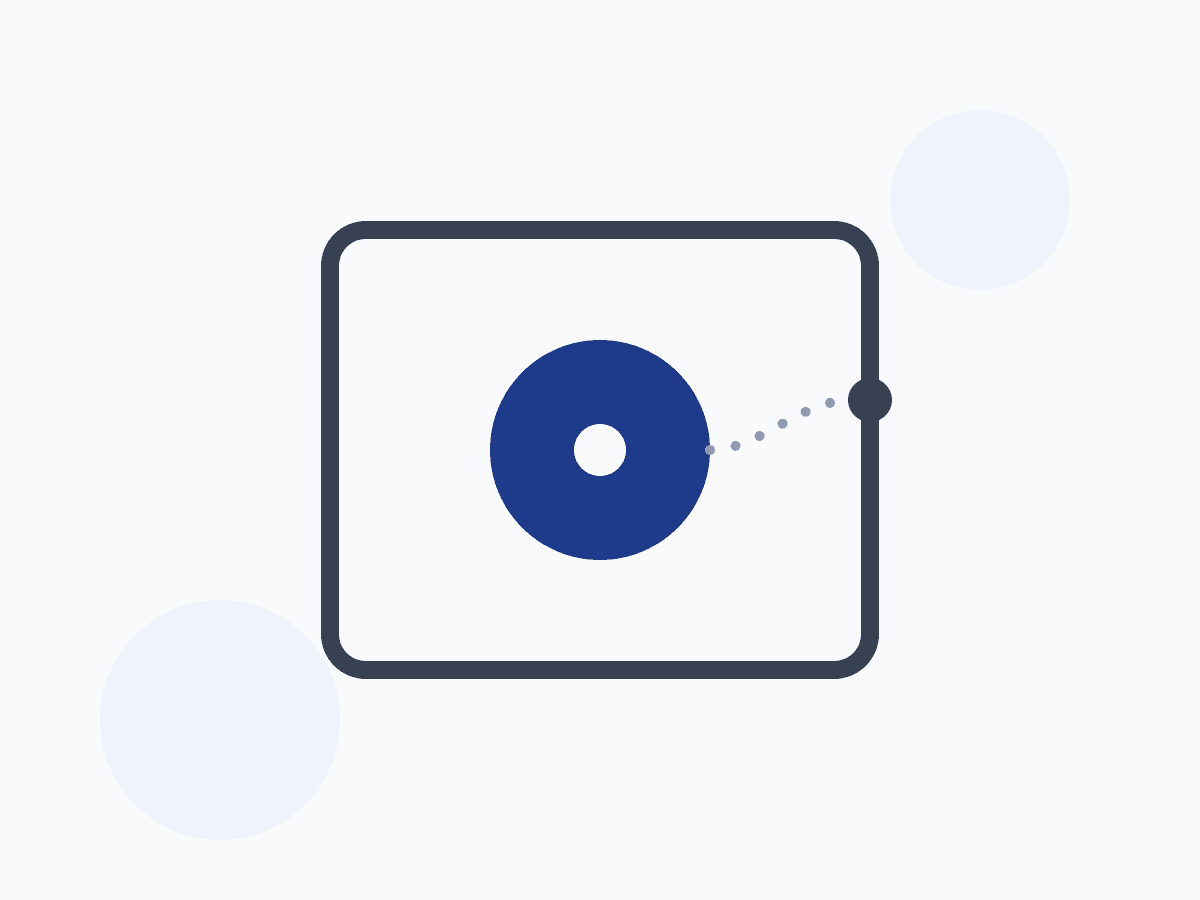
Designing to the ceiling has a cost argument behind it. The trusted core of T2R2 is deliberately small, small enough to be read line by line, so the surface that must carry the heaviest scrutiny is small too. Everything else, including the AI agents themselves, runs outside that core and is treated as untrusted. An audit or an inspection covers a core that fits in a reviewer's hands, not a platform nobody can enumerate.

T2R2 runs on standard infrastructure, inside your walls first and in the cloud when you choose.

LLAAMA is a European company and a signatory of the European Virtual Human Twins Manifesto.

T2R2 — a small trusted core

Getting started

Whether you are choosing an AI model for your hospital, preparing an AI Act file, or designing a study in which a Patient Digital Twin accompanies each participant, the question is the same: what holds the AI in place?

We would be glad to walk you through T2R2 in an architecture session, or to scope a pilot on your own infrastructure.

Talk to us →

Read next: AI can propose. Only people decide. · The Patient Digital Twin

T2R2 — getting started